

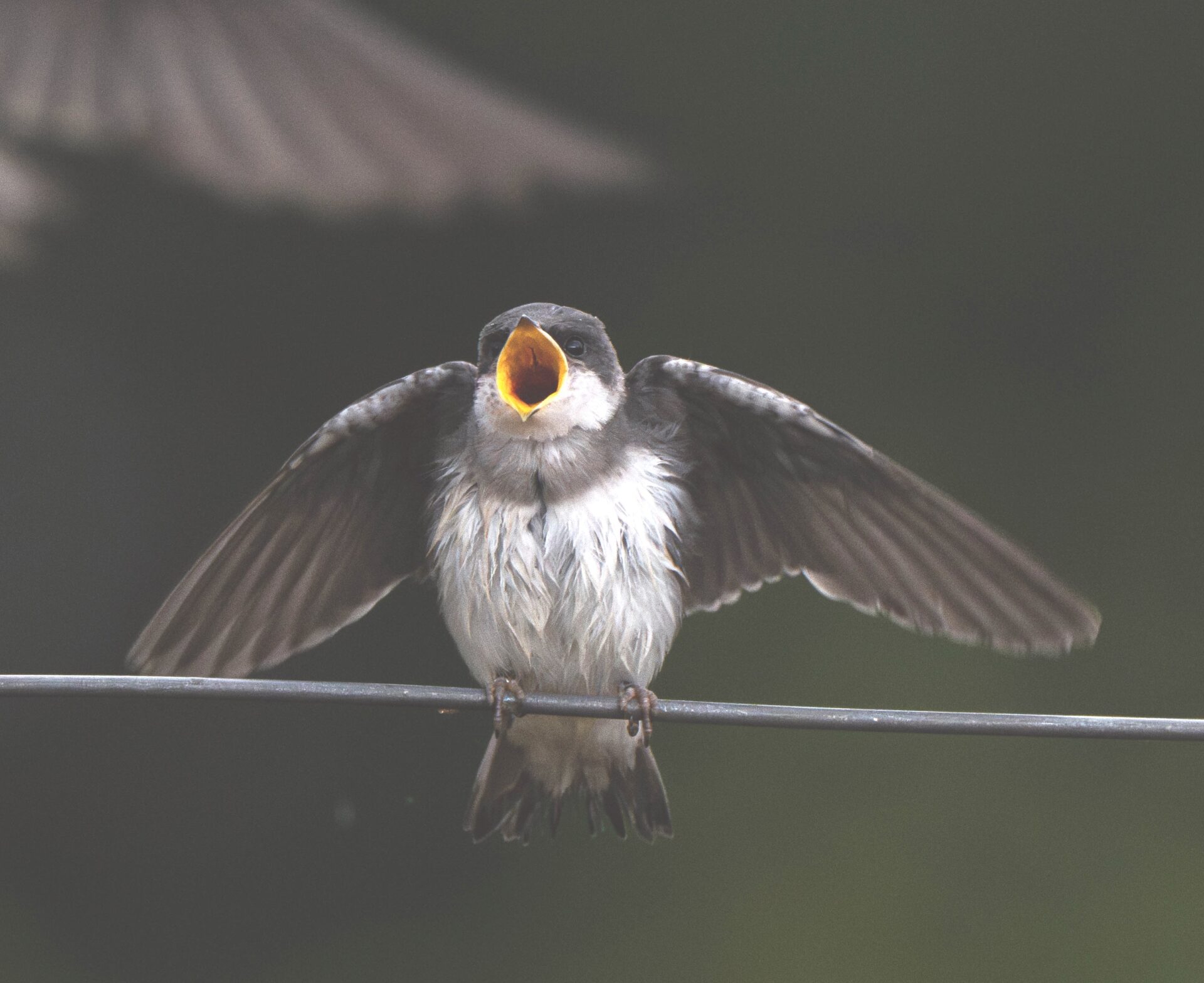
Every spring and fall, a silent tragedy unfolds beneath the glass canyons of our cities. While we sleep, Birds perish by the dozens all across the United States after striking illuminated windows [1].
On the Atlantic Flyway, the density of cities like New York and Boston creates a lethal gauntlet that claims upwards of 300 million lives each year. Along our own Pacific Flyway 150 million [2]. birds die from the lights of sprawling cities..
In Seattle, volunteers from a Bird Society called Birds-Connect-Seattle patrol the pavement at dawn [4]. On the doorsteps of the tallest buildings, these volunteers find the broken bodies of Golden-crowned Kinglets, Varied Thrushes, and Wilson’s Warblers.
Who has stopped the slaughter?
Chicago launched its first “Lights Out” program in 2000. They saved an estimated 10,000 birds annually at monitored sites [3]. The lights are turned out on migration dates rather than asking for year-round darkness.
By focusing on the peak weeks of migration, programs in San Francisco and New York have gained the support of building managers who receive “Migration Alerts” in their utility bills [9].
However, the journey remains perilous. The trek north for migrating humming birds starts in Honduras then crosses open water to Jamaica then to Cuba before the 90 mile crossing of the Florida Keys.
Miami, at the edge of the Everglades, has only recently begun voluntary monitoring. This city is the first in a 2000 mile flight up the coast to New England. [8] Without a municipal “Lights Out” mandate, the east coast remains a brilliant, dangerous wall of light all the way to Boston.
Washington State Legislation failed.
In the 2026 session, Washington’s bird-friendly legislation stalled in committee over the cost of retrofitting state offices. But bird lovers remained undeterred. The legislation SB 6355 / HB 2741, gained significant attention during the 2025 and 2026 sessions. The legislation was stalled but not stopped. New legislation often takes 3 to 5 years to pass.
These “Lights Out” and bird-friendly building bills aim to set standards for state-owned buildings and large commercial properties to reduce artificial light at night (ALAN).
What can be done without legislation?
The beginning of the battle for the flyway is in our own backyards. Homeowners can install full cut-off fixtures that redirect light toward the ground. It makes doorways safer for humans while keeping the sky dark for the 80% of birds that migrate at night [7].
Residents in homes and multiple story apartments can install simple markers and dots on the outside of the glass. This breaks up the reflections that trick a bird into seeing a clear path toward which it takes off only to die on the ground [11].
In apartments and tall buildings the lights can be put on a mothion detector to come on with movement in the parking lots or office windows. In some cases it is as simple as using red lights. They are easy on human and bird eyes and don’t attract insects and birds to a bright white light.
Volunteer bird lovers can, without legislation, employ a public relations program that invites building owners from Chicago to New York to shut down their lights nearing migration times. Organizations and public utilities can send out reminders to shut down during mitigation.
Builders don’t want a change in building code or to put tall building lights on a timer. And, owners don’t want to retrofit their night lights all year long when migration period is just a few weeks in the fall and spring.
The first volunteers in 2000 learned that 50% of annual migration happens on just 10% of nights. This allows for “Targeted Lights Out” advisories that can be sent to building operators and owners that save birds without disrupting city operations year round.
West coast flyway: LA, San Diego, and San Francisco
The San Diego Bird Alliance has expanded its influence by partnering with the Los Angeles Audubon Society to create a unified Southern California front for “Lights Out” pledges [8]. They use a voluntary pledge system where building owners receive a “Bird-Friendly Building” window decal to display in lobbies.
San Francisco reaches the public through a mix of city legislation and direct communication. Their “Standards for Bird-Safe Buildings” are integrated into the city’s building code, making certain features mandatory for new construction.
For existing skyscrapers, they utilize:
- Direct Mailers: Targeted postcards sent to the top 100 tallest building managers.
- Utility Bill Inserts: Some West Coast cities have experimented with adding “Migration Alerts” to commercial utility bills to remind owners of the spring and fall mitigation dates [9].
- Effectiveness Studies: National Audubon research indicates that direct, seasonal reminders (like postcards or alerts) are more effective than static policies, as they create a sense of urgency during the 2-week “peak” migration windows [10].
Homeowner solutions for sliding doors and windows
To prevent collisions at home, light redirection is only half the battle; window reflection is the other.
- Visual Markers: Apply “feather friendly” dots or decals on the outside of the glass. They must be spaced no more than 2 inches apart to be effective.
- Screens and Netting: Installing external screens significantly reduces reflections and provides a soft cushion if a bird does hit the glass.
- Parachute Cord: “Accordion BirdSavers” (vertical cords hanging in front of windows) are a low-cost, highly effective way to break up reflections [11].
Ruby-throated Hummingbird: These birds perform a miraculous 20-hour non-stop flight from Honduras across the Gulf of Mexico to reach the Carolinas and beyond [5].
Only the hummingbird defies gravity.
It is a three-gram wonder with a heart that beats 1,200 times per minute. When it reaches Florida, it is exhausted, its tiny fat reserves nearly spent. It begins its trek up the coast, navigating the artificial suns of Jacksonville and the neon glare of New York.
Among all the wonders of the world is the hummingbird’s ability to hover, to fly backward, and to survive a thousand-mile journey on wings the size of a thumbprint. It is the most incredible feat in the avian kingdom. They weigh less than a nickel, yet they carry the weight of the world’s beauty on their backs.
The sky belongs to them. A single light bulb can end a journey that began three thousand miles away. Certainly we can dim our world so they can keep theirs bright.
Washington State “Lights Out” Legislative Update
In the 2026 state the legislature sessuib the bill numbers we tracked were SB 6355 / HB 2741, which gained significant attention during the 2025 and 2026 sessions. These “Lights Out” and bird-friendly building bills aim to set standards for state-owned buildings and large commercial properties to reduce artificial light at night (ALAN).
The 2026 legislative session concluded without passing SB 6355, the primary vehicle for bird-friendly building standards. The bill sought to require state-owned offices to dim non-essential lighting during peak migration (spring and fall) and directed new construction to use bird-safe glass or shielding.
While the bill received public hearings in the Senate Committee on State Government & Elections, it stalled in the Ways & Means Committee due to concerns regarding the fiscal impact of retrofitting older state facilities.
A leading bird advocate and volunteer from the Seattle Bird Alliance noted the setback with determination. “We are building a case that the cost of a few light timers is nothing compared to the loss of our ecological heritage,” they stated. “We will be back next year with a stronger coalition to ensure this bill crosses the finish line.”
The Seattle Bird Alliance (formerly Seattle Audubon), led by Conservation Director Joshua Morris, manages the Seattle Bird Collision Monitoring Project. Volunteers patrol downtown Seattle at dawn during migration periods.
The Success of “Lights Out” Programs
Programs in major cities prove that voluntary participation works.
- Chicago: The longest-running program (est. 2000), saving an estimated 10,000 birds annually at specific monitored lakefront buildings [3].
- New York & Boston: Active voluntary programs supported by local Audubon chapters and city ordinances for municipal buildings.
High-Risk Species and Migration Wonders
Two species highlight the importance of these protections:
- Ruby-throated Hummingbird: These birds perform a miraculous 20-hour non-stop flight from Honduras across the Gulf of Mexico to reach the Carolinas and beyond [5].
- Golden-crowned Kinglet: A tiny, high-energy insectivore frequently found by Seattle Bird Alliance monitors during downtown dawn patrols [6].
Residential Mitigation
Homeowners can significantly reduce “sky glow” by redirecting light. Using full cut-off fixtures ensures light is directed at the ground or door. This creates a brighter, safer entry point for the human while keeping the sky dark for the 80% of birds that migrate at night [7].
Footnotes
[1] Rosenberg et al., “Decline of the North American Avifauna,” Science (2019). Cornell Lab of Ornithology. [2] Loss et al., “Bird–building collisions in the United States,” The Condor: Ornithological Applications (2014). [3] Field Museum of Natural History, Chicago Bird Collision Monitors Data Archives (2000–2025). [4] American Bird Conservancy, “Bird-Friendly Building Design & Local Ordinances” (2024). [5] National Audubon Society, Guide to North American Birds: Ruby-throated Hummingbird. [6] Seattle Bird Alliance (formerly Seattle Audubon), Bird Collision Monitoring Project Annual Report. [7] International Dark-Sky Association (IDA), Residential Lighting Best Practices Guide.Bird organization and cities reach out to building owners and home owners.
National Audubon Field Guide Links
- Ruby-throated Hummingbird: https://www.audubon.org/field-guide/bird/ruby-throated-hummingbird
- Golden-crowned Kinglet: https://www.audubon.org/field-guide/bird/golden-crowned-kinglet Golden-crowned Kinglet: A tiny, high-energy insectivore frequently found by Seattle Bird Alliance monitors during downtown dawn patrols [6].
California Outreach: LA, San Diego, and San Francisco
The San Diego Bird Alliance has expanded its influence by partnering with the Los Angeles Audubon Society to create a unified Southern California front for “Lights Out” pledges [8]. They use a voluntary pledge system where building owners receive a “Bird-Friendly Building” window decal to display in lobbies.
San Francisco reaches the public through a mix of city legislation and direct communication. Their “Standards for Bird-Safe Buildings” are integrated into the city’s building code, making certain features mandatory for new construction. For existing skyscrapers, they utilize:
- Direct Mailers: Targeted postcards sent to the top 100 tallest building managers.
- Utility Bill Inserts: Some West Coast cities have experimented with adding “Migration Alerts” to commercial utility bills to remind owners of the spring and fall mitigation dates [9].
- Effectiveness Studies: National Audubon research indicates that direct, seasonal reminders (like postcards or alerts) are more effective than static policies, as they create a sense of urgency during the 2-week “peak” migration windows [10].
Homeowner Solutions for Sliding Doors and Windows
To prevent collisions at home, light redirection is only half the battle; window reflection is the other.
- Visual Markers: Apply “feather friendly” dots or decals on the outside of the glass. They must be spaced no more than 2 inches apart to be effective.
- Screens and Netting: Installing external screens significantly reduces reflections and provides a soft cushion if a bird does hit the glass.
- Parachute Cord: “Accordion BirdSavers” (vertical cords hanging in front of windows) are a low-cost, highly effective way to break up reflections [11].