Seattle, WA —/(CFS) and its ally, Coalition to Protect Puget Sound Habitat, filed a motion for summary judgment in federal court. Groups ask the court to set aside Letters of Permission (LOPs) and stop nine large-scale industrial shellfish operations in Washington’s from working on sensitive coastal waters.
Despite a 2019 Order from this Court requiring the U.S. Army Corps of Engineers to fully analyze the environmental effects of industrial shellfish operations, the Corps has instead relied on streamlined permit review procedures known as LOPs to authorize these same operations without any environmental review or public notice.
Plaintiffs have been seeking a review of the impacts of industrial shellfish aquaculture in Washington for over a decade, and yet the Corps’ latest permitting scheme still does not do the Cumulative impact study required by the Federal Judge in 2019.
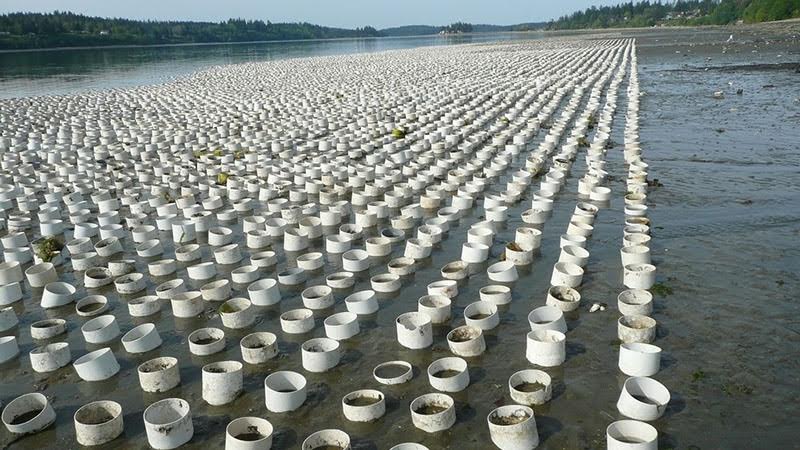
This latest effort challenged nine aquaculture farms that are massive operations spanning hundreds of acres of Washington’s most sensitive coastal habitat. These plastic-intensive operations have significant adverse effects on the surrounding environment, including threatened and endangered species that depend on these waters for habitat.
The Corps should have provided public notice and completed an environmental assessment before issuing any individual permits to these operations. Instead, the Corps unlawfully issued LOPs to these operations for the last 6 years without any required analysis or public involvement, Over 300 permits at last county..
“The Corps has misused the LOP permitting process to evade environmental review and public notice-and-comment for industrial shellfish operations with significant adverse effects on the environment.” said Kristina Sinclair. She is staff attorney at Center for Food Safety. “We’re calling on the court to do what the Corps failed to: protect our marine ecosystems from being overwhelmed by plastic, and pesticides.
Shellfish aquaculture in Washington state already occupies a massive footprint:
- Between 38,700 and 50,000 acres of tidelands—nearly a quarter of all tidelands in the state—are used for commercial operations, including in Puget Sound, Willapa Bay, Hood Canal, and Grays Harbor.
- These facilities use 43,000 PVC tubes per acre to grow geoducks, as well as predator netting, and herbicides to prepare and to harvest the seabed. .
“We’re not opposing shellfish farming—we’re opposing the Corps’ failure to properly evaluate the risks associated with industrial shellfish operations.” said Sinclair. “Industrial aquaculture must be accountable to the local communities whose lives and cultures are tied to these waters.”
The Army Corps’ issued nine more permits which were granted with no environmental review or public notice. They failed to acknowledge the impacts we see on the beach and in the water daily.
“This isn’t sustainable aquaculture— or call it factory farming. Today’s filing is a crucial step in protecting our vulnerable coastline and oceans.” said Laura Hendricks, Director of Coalition to Protect Puget Sound Habitat.
[end 547