by Kirk Kirkland
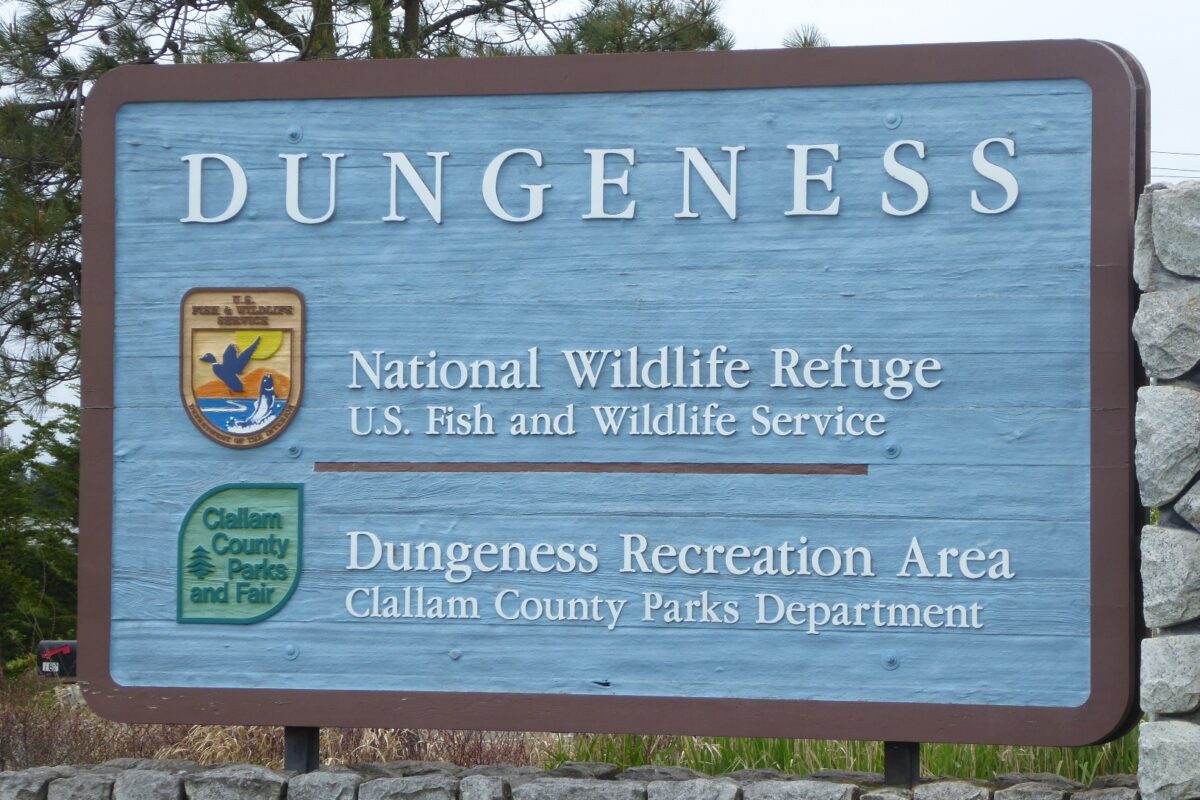
The Dungeness National Wildlife Refuge and Protection Island are for the birds. They pause here annually to feed in preparation for their migration across the Strait of Juan de Fuca.
On August 16, 2023, Protect the Peninsula’s Future, the Coalition to Protect Puget Sound Habitat, and Beyond Pesticides sued the U.S. Fish and Wildlife Service. [2] The Service disregarded its own regulations. It failed to write an environmental review for the Jamestown S’Klallam’s proposed 34-acre, industrial-oyster operation. The intertidal area abutting the Refuge land would contain 80,000 plastic bags of non-native oysters.
. 
Oyster aquaculture reduces the total amount of habitat available to feeding
birds during crucial migration closures of the refuge.
____________________________________________________
When the U.S. District Court in Tacoma heard the case the judge made a Summary Judgement in favor of the Coalition. But the Jamestown Tribe sued without waiting for the judge’s final determination. It appealed the ruling to the U.S. Court of Appeals for the Ninth Circuit Court. All briefs were submitted by April 2026. We now wait for the decision.
In the last month a citizen coalition met with staff of Senator Murray, Senator Cantwell, and Representative Emily Randall. Their staff said they had not seen the tribe’s proposal for a land transfer. They said that the Senators and Emily Randall do not respond to the tribe until the proposal becomes a bill.
We gave the staff a rewrite of the tribe’s proposed land transfer that showed how the tribe intends to revoke the enabling legislation for the Wildlife Refuge which would allow commercial oyster aquaculture in the refuge.
We also discussed the Federal court suit with the staff. They said that members of Congress do not interfere with a pending federal court case.
Former Clallam County Commissioner and Charter Review Committee member Ron Richards has asked the county and the community to examine the “pros and cons” of this land transfer. [3]
Now the remaining issue is how the land transfer will affect tax assessments for library bonds and if the fire district can extend services across the 12-mile gap.
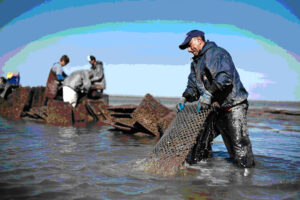
The refuge closes these beaches to protect habitat, satisfying the Shoreline Management
Act’s “no net loss” mandate; aquaculture operations disrupt this vital bird feeding cycle.
______________________________________________________________
The Jamestown Tribe is proposing a land transfer of two Refuge properties – 631 acres of the Dungeness National Wildlife Refuge (“spit”), approximately 365 acres of Protection Island and 144 acres in Blyn near the Tribe’s casino.
“We believe these public lands should remain in ownership of the public,” said Darlene Schanfald of Protect the Peninsula’s Future. [5] “This guarantees public oversight and responsibility. Wildlife habitats like these are dwindling along the migration routes from Mexico to the Arctic.”
Any activity on a national refuge requires a Compatibility Determination (CD) from the refuge manager. The Tribe’s proposed land transfer would set a dangerous national precedent. It would open a loophole that would allow commercial aquaculture in over 150 U.S. Wildlife Refuges.
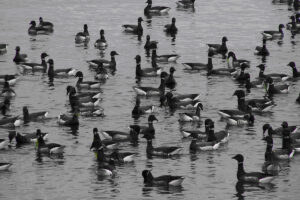
The Black Brant population in the Refuge dropped sharply between the 1960s and 1980s. They have not recovered Factors contributing o the decline includes development of coastal waterways, habitat degradation and loss of eelgrss beds
_______________________________________________________________________________
Next steps in the process is for the Clallam County Commission to review the fiscal realities of the land transfer. Ron Richards is asking them to analyze how the library, fire district, and public utility board will have to solve delivering government services across the 12.4-mile gap of rural homes and farms between the wildlife refuge and the tribal lands on highway 101.
Clallam County Fire District #3 (CCFD3) faces an operational crisis. Providing emergency services across 12.4 miles of non-sovereign land creates a significant response-time liability. Washington state statutes governing junior taxing districts (RCW 52.02) require contiguous service areas for equitable assessment.
Since the district cannot legally prioritize a non-contiguous sovereign entity over its local taxpayers, this 12-mile gap creates an unfunded liability that degrades safety for all existing residents.
The North Olympic Library System (NOLS) recently secured a levy lid lift and drew $1.5 million from reserves to maintain branch operations. The land transfer would remove properties from the tax rolls. The 12.4-mile gap becomes the next reason to stop the land transfer because without a contiguous border, there is no mechanical way to pay off capital costs.
NOLS lacks the administrative capacity to manage government-to-government service arrangements across this 12.4-mile gap and avoid a permanent fiscal deficit.
The problem: The federal law, that gives wildlife priority over industrial aquaculture, and the state laws, governing fire districts and library systems, create multiple legal reasons for the Tribe’s proposed land transfer to fail.
The Solution: Only one option remains for the Tribe’s land transfer. Accept a land transfer of 144 acres surrounding the town of Blyn. This limited proposal honors ancestral lands, protects local property taxes, ensures public delivery, and leaves the wildlife refuge intact.
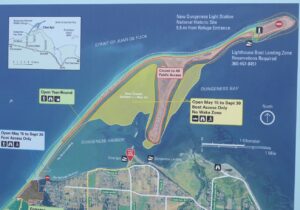
The Migratory Bird Act protects habitat at the refuge by allowing hikers and visitors to stay on west side of the peninsula while leaving the logs and mud on the east side for birds to feed and breed.