by Kirk Kirkland
A 110-year-old federal refuge is currently the center of a jurisdictional tug-of-war. The U.S. Fish and Wildlife Service (USFWS) shifted management of the Dungeness National Wildlife Refuge to the Jamestown S’Klallam Tribe through a co-stewardship agreement.
This move coincides with tribal plans to install a 50-acre industrial oyster farm within refuge boundaries.
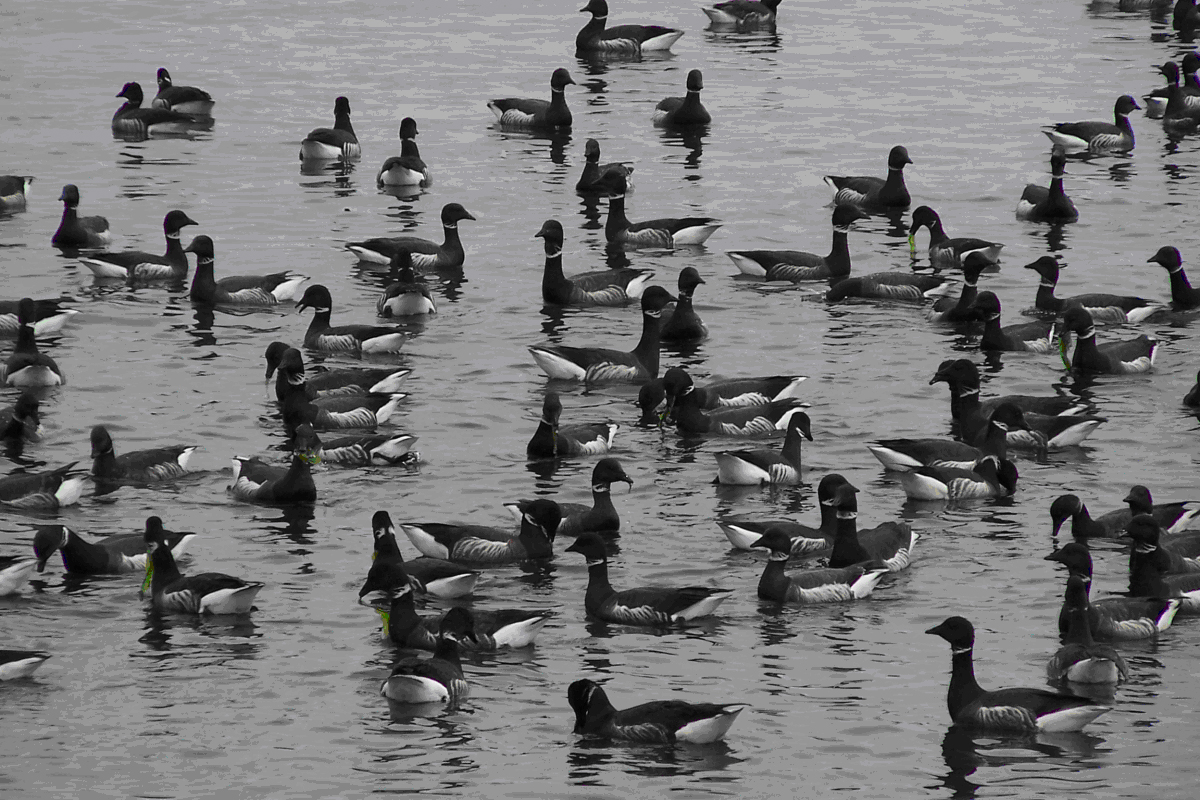
The site of the industrial oyster farm is in an area closed to the public specifically to prevent “human disturbance.” Black Brants are notoriously skittish. They rely on undisturbed access to eelgrass to survive their migrations. Black Brant are a “Species of Concern” protected by the Migratory Bird Treaty Act. This law is strict but remains distinct from the Endangered Species Act.¹
The Legal Challenge
Several non-profits are challenging the federal government’s silence. These include Protect the Peninsula’s Future, Protect the Puget Sound Coalition, and Beyond Pesticides. Their lawsuit alleges the USFWS bypassed the National Wildlife Refuge System Administration Act.
This law requires a formal “compatibility determination” before any commercial use occurs on refuge lands. Darlene Schanfald with Protect the Peninsula’s Future stated the following in the complaint:
“Migratory birds suffer much on their lengthy journeys each fall and winter—air pollution, water pollution, toxic fumes. Now they face starvation as their reliable feeding grounds will be taken. This cannot be allowed.”
The Science of the Black Brant
The Black Brant geese are highly specialized feeders. They rely almost exclusively on the eelgrass beds in Dungeness Bay.
- Physical Exclusion: The proposed farm involves anchoring 80,000 plastic bags to the seafloor. This gear physically prevents the birds from accessing their food.
- Flyway Disruption: Dungeness is a vital “refueling station” on the Pacific Flyway. If this site is degraded, the birds may lack the energy reserves to complete their migration. This violates international treaties designed to protect these flyways.
The Sequim City Council Connection
The Sequim City Council met on March 23 to discuss its “Statement of Co-Existence” with the Tribe. The City does not own the refuge. However, its political endorsement provides cover for a land transfer. This would move these tidelands out of federal oversight. This follows a pattern of local government deferring to commercial interests over established environmental protections.
The Washington Department of Natural Resources (DNR) already issued a permit for this farm. It claimed the permit is “consistent” with state law. However, federal judge Benjamin Settle recently ruled that the public has a right to administrative compliance. He noted that the “Refuge Act procedural requirement to complete a compatibility determination” is a safeguard that cannot be ignored.
You cannot call a place a “wildlife refuge” if the primary residents are being evicted by 80,000 plastic bags.
Can Science Protect the Birds?
The Black Brant (Branta bernicla nigricans) is a “specialist” migrant. Unlike other geese that graze on grass, the Brant’s survival depends almost entirely on Common Eelgrass (Zostera marina).
- The Energy Deficit: Brants have a narrow “energy window” during their 3,000-mile journey. They must consume massive amounts of eelgrass to fuel their flight. They rest and feed in the refuge before crossing the Strait of Juan de Fuca into Canada for breeding.
- The Tide Trap: Brants only feed on rooted eelgrass during low tides.
- The Exclusion Effect: Placing 80,000 plastic aquaculture bags over these beds creates a physical barrier. Even if the eelgrass survives beneath the bags, it becomes “ghost food.” It is visible but inaccessible. This forces the birds to burn critical fat reserves. This often leads to migration failure.
The “Compatibility” Barrier
Plaintiffs filed a lawsuit in federal court in Tacoma. They asked the judge to rule on the Refuge Act. They want to determine if the refuge operators must assess the impacts of a commercial oyster project on Black Brant.
The legal challenge falls under the National Wildlife Refuge System Administration Act (16 U.S.C. 668dd). Can federal refuge land become “excess property” for political or commercial favors?
- The Compatibility Test: The law strictly forbids the Secretary of the Interior from permitting any use of a refuge unless it is formally determined to be “compatible” with the refuge’s primary mission: conservation.
- Commercial Restrictions: 50 CFR § 29.1 states that economic uses may only be authorized if they contribute to the achievement of the refuge’s purposes. Farming oysters for profit does not meet this standard.
- Ownership: “Co-Stewardship” agreements allow for shared management. They do not transfer ownership. The title to the land remains with the United States. Transferring actual “fee-simple” ownership to a non-federal entity requires a specific Act of Congress.
Take Action: Join the Fight for Dungeness
It is time for advocates to speak up. Many joined with neighbors on the Olympic Peninsula to ask the Department of Natural Resources to withhold a contract for this project. Now it is time to ask our congressional members to intervene. The Dungeness National Wildlife Refuge must remain public land to protect the refuge’s residents: the wildlife.
What you can do? Send a brief email to your representatives. Contact Senator Maria Cantwell and Representative Emily Randall. Tell them not to allow commercial aquaculture to take over this Wildlife Refuge.
- Tell your legislators that the federal law must be obeyed. Public lands must remain protected from industrial aquaculture development.
- Ask the U.S. Fish and Wildlife Service to complete the legally required scientific assessment. National Wildlife Refuges are for wildlife, not for 80,000 plastic bags.
EMILY RANDALL: https://randall.house.gov/contact/email-me
MARIA CANTWELL: https://www.cantwell.senate.gov/contact/email/form
Civilizations do not fall only from war or economics. They fall when the living systems that sustain them are quietly dismantled.