


By Kirk Kirkland
Eighteen years ago, farmed oyster larvae began disappearing in mass die-offs, mystifying hatchery managers in the Pacific Northwest and threatening a thriving part of the region’s shellfish economy, according to an article in the New York Times in July 2025.
Up to 90 percent of the farmed Pacific oysters are being lost. Businesses like Taylor Shellfish Farms stand at the brink of catastrophe.
The culprit turned out to be an increasingly acidic ocean, and research efforts to solve the mystery have propelled Washington State to the forefront of the world’s efforts to understand and offset the shifting chemical composition of the seas.
The global race against ocean acidification is intensifying as carbon dioxide levels in the seas increase.. Researchers said the deteriorating conditions could “result in significant declines in suitable habitats for important calcifying species,” including coral reefs and bivalves.
“The rate of change has shown much faster change over the last 50 years than it did over the previous 200 years. The expectation is, as we continue to release carbon dioxide into the atmosphere, that rate will continue to increase.” according to Dr. Richard Feely, a chemical oceanographer with the National Oceanic and Atmospheric Administration in Seattle
As the rate of acidification rises, scientists are considering drastic, controversial options to try to stem the damage that is weakening the skeletons of coral reefs, the habitats of millions of species and the shells of bivalve animals and zooplankton, essential to the marine food chain.
One of the earliest successful remedies was the introduction of sodium carbonate, to the seawater in the hatcheries. Now, experts are exploring much more extensive countermeasures: adding minerals along shorelines to wash alkaline water into the sea.
Some researchers warn that some of the methods being studied to change ocean chemistry could unleash unintended, adverse effects on other species and on the seas themselves.
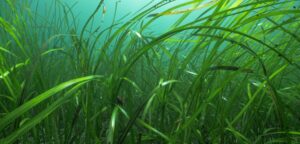
Over the last decade, the environmental community has spoken out against the shellfish industry whenever they use drastic chemical solutions to eradicate eelgrass with pesticides. In last years session, the legislature passed a bill to fund research that could remove ghost shrimp, a major native species that is destructive of oysters.
The bill argues that private business deserves these funds because the Department of Ecology prohibited them from spraying potent neonicotinoid pesticides over tidelands where shellfish are grown. This bill uses Model Toxic Control Act (MTCA) dollars to eradicate the burrowing shrimp for the benefit of a small group of private business interests.
SHB 1309 is contrary to MTCA’s Declaration of Policy. The policy language is very clear about its intention to “clean up all hazardous waste sites” and “prevent the creation of future hazards due to the improper disposal of toxic wastes”; neither “clean ups” nor management of toxic waste “disposal” are intents of SHB 1309.
SHB 1309 also directed over $200,000 from the General Fund which would to spend public funds on private Shellfish aquaculture. The bill creates a “governing board” composed of only private shellfish company members. It gave the board the authority to guide the “Department of Agriculture on the expenditure of research grant funds.”
“This is an inappropriate capture of authority over public funds for private purposes,” said John Garner, an environmental advocate who often comments on state legislation.
Despite a lobbying effort by our environmental advocates, SHB 1309 found its way to the Governor’s desk for his signature. This year we were unable to stop the bill in the Senate from getting into the House. In the past when we had good information about damage to native species or about the high cost, we were able to stop the bills. This year, despite the shortage of money for the budget, this bill sailed through the committees to the governor’s office.
The summer when we meet to discuss next years legislative agenda, it is important that our organizations know more about acidification and the various ways the shellfish industry might do damage to our native species, including salmon and whales, from being adversely affected from proposed solutions.
In the Pacific Northwest, most of the farmed shellfish are raised in Washington State, generating an industry valued at $270 million a year and providing more than 3,000 jobs.
For years, the industry has also been buffeted by the effects of warmer ocean temperatures, which weaken sea creatures’ immune systems, making them more susceptible to pathogens. Last year, an outbreak of paralytic shellfish poisoning, caused by algae that produces neurotoxins, shut down wild shellfish harvests in the Pacific Northwest.
For now, the industry is thriving. The Taylor family owns or leases 14,000 acres along the West Coast where they raise five types of oyster.
Oysters are planted on tidal flats, in the soil, or in floating bags at low tide. They are harvested after one year, or sometimes up to five years. Taylor Shellfish produces 40 million oysters a year: 4 million pounds of manila clams, 1.5 million pounds of mussels and a million pounds of geoducks, according to a story in the New York Times in July 2025
The future of oyster farming is uncertain as the ocean chemistry conditions worsen, and the industry lacks the ability to treat the water.
Treating water in the oyster hatcheries is merely a stopgap measure. Aside from shellfish, acidification is taking its toll on other sea life, including tiny pteropods (sea slugs and snails) and krill. That is causing a decline in food sources and critical nutrients for salmon and other fish.
Researchers are exploring other ways to adapt to changing waters. They are breeding oysters that may be more resistant to acidic waters. Farmers are considering the possibility of natural refuges to grow oysters, including planting thick stands of eelgrass that soak up carbon dioxide near the farms.
In the last 3 years the Department of Natural Resources has completed an eelgrass mapping program and now are distributing funds for restoration of eelgrass.
Researchers on the coast of Washington are studying strategies for carbon dioxide removal, a type of geoengineering. Several companies are building test facilities that would process seawater, removing out acid then dump the more alkaline water to the ocean.
One such effort, at the federal Pacific Northwest National Laboratory in Sequim, would treat hundreds of thousands of liters of seawater daily, using an electrochemical process to split the salt water into alkaline and acidic streams.
The acidic water would be shipped out or treated further, while the alkaline water would be taken out to sea and dumped from a barge into the ocean.
These new approaches are untested and controversial. In 2023, dozens of governments warned about plans to enhance ocean alkalinity, citing possible “deleterious effects that are widespread, long lasting or severe.”
In Washington State, a small group of advocates who have worked together to stop the spread of geoduck aquaculture shows up each year when the Shellfish Industry proposes funding for pesticides or other means of eradicating eelgrass or ghost shrimp.
We are worried that geo-engineering will have unintended consequences, since what works in a laboratory may fail in the natural environment. During the next legislative session, we will have to keep an eye on the funding for HB 1309. We will also be watching for “Wild West” experiments that may have unintended consequences.
[end 1921 1429 2303 2058 2023