

Hearing Examiner’s Decision on Spanaway Marsh is Flawed
by Kirk Kirkland
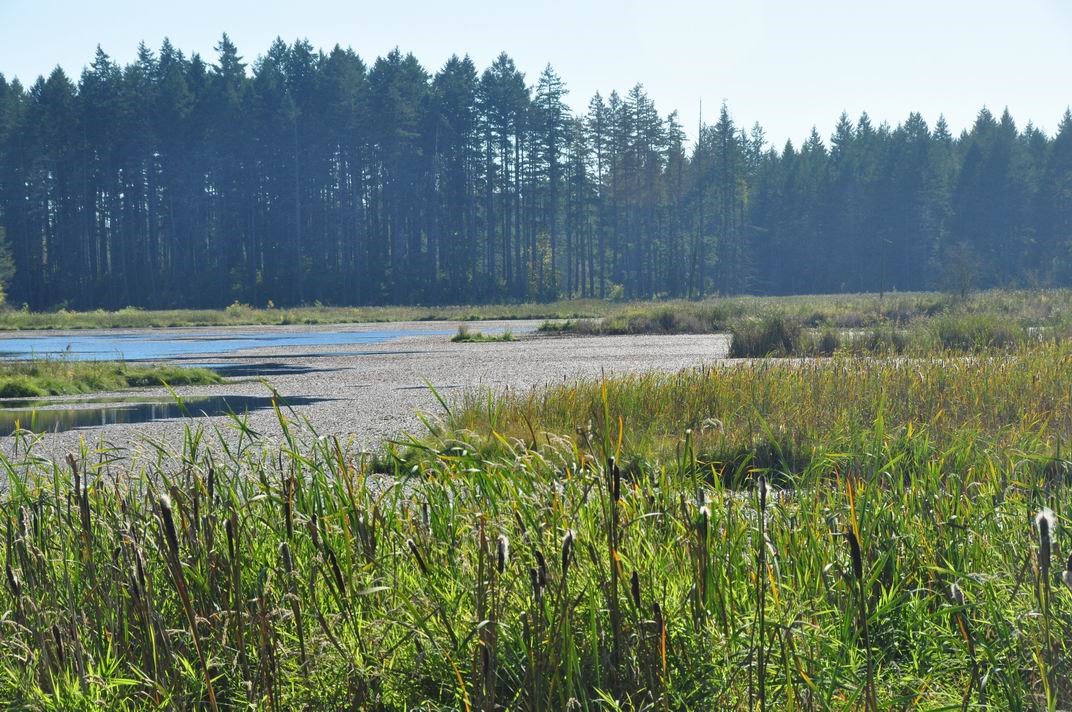
The Pierce County Hearing Examiner’s decision last week granted Tacoma Rescue Mission a permit to build a tiny homes village and parking spaces for recreation vehicles. It will cut down over 700 trees in an old growth forest near Spanaway Marsh and Audubon Springs, which WDFW has designated as a wildlife corridor for endangered species.
Considering the aggressive way the Hearing Examiner cross-examined the appellants’ wetlands expert witness during the hearing, the final decision represents his bias against the Spanaway Concerned Citizens and his dismissive approach toward citizens who spoke at the hearing.
The very least the Hearing Examiner should have done, considering the wide disparity of the opposing experts, was to require an Environmental Impact Statement to study the effects of a 280-unit micro-village on an 80-acre site with several large wetlands. The examiner denied this request by Spanaway Concerned Citizens.
SCC raised concerns that the site is too close to several sensitive wetland habitats. They pointed out that the site, zoned Rural Resource, cannot be used because it is designated as a priority wildlife corridor by the Washington Department of Fish and Wildlife (WDFW).
The Examiner’s decision failed to acknowledge the legal argument as to whether Pierce County Code and WDFW determination was sufficient to protect the wildlife corridor or the wetlands. Moreover, he did not acknowledge that the wetlands were protected by the county’s Critical Area Ordinance.
The Hearing Examiner’s treatment of the appellants was noticeably different from his treatment of the applicants on the first day. The Examiner refused to let the first public speaker finish her presentation, then continued with an overbearing and intimidating demeanor toward the remaining speakers at the public hearing.
The Hearing Examiner frequently interrupted the presentation of the appellants’ wetland expert during a 6-hour grilling. When the applicant’s wetland expert made her completely opposite presentation, she was not interrupted or asked to answer the same set of questions.
=
Decision Ignores Wildlife Designation
The Hearing Examiner determined that there were no Western Gray Squirrels on the property by using information from the applicants, while ignoring the testimony of the appellants. The applicants’ survey for WG Squirrel habitat made the same mistake as the biologist who looked for Western Gray squirrels in the FEIS of the Cross-Base Highway–they looked for squirrels during the wrong seasons of the year.
The creatures are not present at the property site all year; rather, they move throughout the designated wildlife corridor. The Western Gray Squirrel must breed and feed with other members of the species in the wetland complex that stretches for 10 miles to the town of Roy.
Although the building site is located less than a half-mile away from one of the Western Gray Squirrel documented locations, the building site is within a biodiversity and habitat connectivity corridor on WDFW’s Priority Habitats and Species (PHS) Map.
The presence of the right kind of habitat and past use of the area by the Western Gray Squirrel should have been enough to provide “special care” for wildlife and their habitat that is provided for in Pierce County Code, PCC 18E.40.010.
“Special care must be taken in management of lands that support critical fish and wildlife species to ensure that development occurs in a manner that is sensitive to their habitat needs.”
WDFW also called for protection of habitat for this wildlife corridor focusing on the Oregon White Oak, which is important habitat for the Western Gray Squirrel. “Consider the value of individual oaks, as well as small and large oak stands, on the landscape. These stands and individual oak trees near each other provide an entire suite of ecological functions and valuable opportunities for wildlife movement through the environment at a landscape scale,” said a WDFW official.
“Additionally, these oaks provide important roosting, nesting, and feeding habitat for resident and migratory birds on smaller scales, regardless of their age or current condition, allowing these trees to continue to grow and mature to a large size. These oaks are important for a variety of wildlife and migration corridors.”
The Hearing Examiner did not mention this material in his finding, nor did he mention the Pierce County Code that would have protected the wetland complex and would have protected endangered and state-listed species of wildlife and trees.
Rather than focus on information from WDFW, the Hearing Examiner argued with two witnesses about the validity of the maps provided by WDFW. Then, he decided that since the Western Gray Squirrel had not been seen during the 60 days that the applicants had been working on site, he determined that the WG squirrel habitat no longer required protection.
The surprise in the decision was that the Hearing Examiner allowed over 670 trees to be cut, and preserved only a few stands of Oregon White Oak, a state listed species. The real irony in reading the conditions for this permit was seeing the care put into the requirement for residents to clean up after their dogs.
The Decision Ignored the Need for an Environmental Impact Statement
The underlying problem is that the County Executive made this application a priority project. A proper study for an Environmental Impact Statement (EIS) usually requires a year to complete. And it is not unusual to take another year to review and complete the Final EIS after holding another public hearing.
As experienced by the Spanaway Concerned Citizens, the cost of each appearance before the Growth Management Hearing Board and this Hearing Examiner are expensive beyond belief.
The cost of this appeal has now reached beyond $120,000.
No other Hearing Examiner decision has ever cost this much money to appeal. Fortunately, the Spanaway Concerned Citizens have hired some of the best attorneys available. They will guide them along the winding path, possibly toward the State Court of Appeals. A decision will be made soon.
Based on my experience with the Cross-Base Highway and the Park Junction Resort revocation, justice is available in the higher courts, but it is going to require persistence and skill in raising money to get through the next round of court appeals.
It is incredible that the Hearing Examiner would not require an EIS for this site. Any other building project of this size and density would have required an automatic Environmental Impact Statement. The Hearing Examiner concluded there were no Western Gray Squirrels at the site when all he was asked was to authorize was a study of their habitat.
[end