



The Western Gray Squirrel is back in the news. The Garry Oak forest is habitat for these squirrels and 670 trees are marked for destruction. 280 tiny homes are planned for development next to this wetland complex that has been the principal habitat for forest wildlife.
Tiny Village Project nears Public Hearing
On March 6, 2024 the city of Lakewood approved a $1 million allocation to the Tacoma Rescue Mission in support of a planned 285-unit micro-home village for people experiencing chronic homelessness. The Lakewood City Council passed a motion to use $1 million of federal American Rescue Plan Act funds for the construction of the first 50 units in the first phase of the project.
This is a significant contribution to the $62 million project planned near Spanaway Lake. However, the project faces a challenge to the conditional-use permit by neighbors and Spanaway Concerned Citizen’s advocates. The challenge will be heard before the Pierce County Hearing Examiner in April. Now that the matter has been settled before the Growth Management Hearing Board, opponents of the Tiny Home Village will turn their attention to public hearings.
In April, the Pierce County Hearing Examiner will decide if the county must complete an Environmental Impact Statement before he approves the Conditional Use Permit for the project. County planning staff used a checklist to evaluate the impacts, but only completed a traffic study. In making a Determination of Nonsignificance, the staff neglected extensive review of impacts on loss of endangered species of trees and wildlife that are found on the 80-acre property.
The main problem with the design? There are only about 28 acres of dry ground on west side of the property where the 280 homes can be located. Then, two large wetlands must be bridged and compromised by a connecting road to Spanaway Loop Road, so there would be a significant impact.
These wetlands are the heart of the wildlife conservation area in and around Spanaway Marsh, and a greater stretch of wetlands that stretch all the way to the Town of Roy.
Read more at forevergreencouncil.org\home

Futurewise: a legislative summary at the end of 2024 session
During this legislative session, you may have heard from Futurewise about rural Detached Accessory Dwelling Units (DADUs) and the need to defeat the bills that would allow rural DADUs to be built without being counted towards the growth targets that are set by the state Growth Management Act.
“These bills were a top priority this year for the builders and realtors associations representing the companies who would have built and sold these new homes,” said Alex Brennan, Executive Director of Futurewise. “They pushed hard on the bills, and Futurewise with their coalition of rural community groups, environmentalists and farmers, diverted a lot of our energy toward stopping this poorly thought-out policy from becoming law.”
Read more at forevergreencouncil.org\news
Critical Climate Change Legislation Passes – Puget Sound Energy to transition customers from natural gas to electricity.
Late Wednesday, the House narrowly voted to send Gov. Jay Inslee one of his priority bills for the session. It is a controversial measure aimed at helping Puget Sound Energy transition its customers from gas to electricity. Inslee signed the bill the following day.
The final vote was 50-45, with two members excused. The bill is one of the top priorities for Inslee and the environmental community this year.
PSE argues that it needs regulatory changes at the Utilities and Transportation Commission to allow it to meet its climate targets under the Clean Energy Transformation Act and the Climate Commitment Act. Far less carbon will be generated as PSE gradually reduces the amount of natural gas delivered to homes and businesses in the greater Puget Sound region.
Read more at forevergreencouncil.org\blog
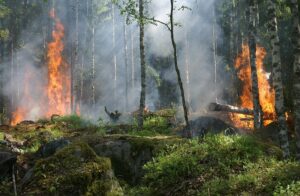
Pierce County aims to prevent smoky summer skies.
More hot, dry summers are on their way, as climate change is most likely making fire season start earlier and last longer. It is increasing the number of hot and dry days per year, drying up our local creeks, and bringing smoke from fires in Western Canada and Eastern Washington.
Pierce County cannot prevent smoke from regional fires, but we can reduce the ability for our local forest to catch fire and threaten our homes and air quality. Droughts that come with climate change have played a role in causing Clover Creek to dry up. Furthermore, a lower water table creates a stressed forest, causing forests to be more combustible and therefore susceptible to wildfires.
To reduce combustible materials in our public and private forests, the county can improve our air quality while also boosting the health of forests. We can increase the resiliency of our forests so they can continue sequestering carbon, in addition to providing wildlife habitat, reducing surface temperatures, and retaining soil moisture.
As you suspected, it is all connected.
Pierce County’s Climate Change Policies already call for maintaining forestland and increase tree canopy cover. These policies call for “Inventorying and classifying all county-owned forests and undeveloped natural lands to plan for long-term use.”
This year we have an opportunity to add new policies and programs to our county’s Comprehensive Plan and Climate Resilience Plan.
Read more at forevergreencouncil.org\news
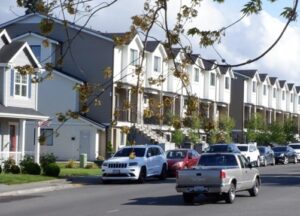
Review of Pierce County Comprehensive Plan amendments
March has been a busy month, with several organizations preparing for appeals before the Pierce County Hearing Examiner. Comments on Environmental Impact Statements have been submitted for the proposed Knutson Farms warehouse project in Puyallup, as well as the County’s revising of the Comprehensive Plan.
The county’s Comp Plan is up for 5-year review allowing people to change policy and regulations. This review is not allowed again until 2019.
The coming hearings for the County’s Environmental Impact Statement for the Comprehensive Plan only lets people speak about the alternatives offered in the EIS, and this is not the place to make major changes to policies and regulations. This document is up for approval next month before the Planning Commission, and comments are limited to 2-3 minutes, depending on crowd size.
I invited the people and organizations who submitted comments and wanted changes made beyond the EIS to share them with me, then together submit those additional changes we all desire into a coordinated letter to County Councilmembers.
Futurewise has several changes to add to our joint letter. I have done this work before, so I recently asked current councilmembers to see if the option is still open where we can have our proposals reviewed by councilmembers. I have several such changes that I would like to make concerning reducing forest fires during coming summers that will be warmer and dryer over the next few years.
Look this story over and let me know what you think. Maybe it’ll will prod you to make similar changes to our comp plan. If so, lets discuss adding your ideas to the ones you’ll read about next month when the promised joint letter is put together.
Read more at forevergreencouncil.org\home