

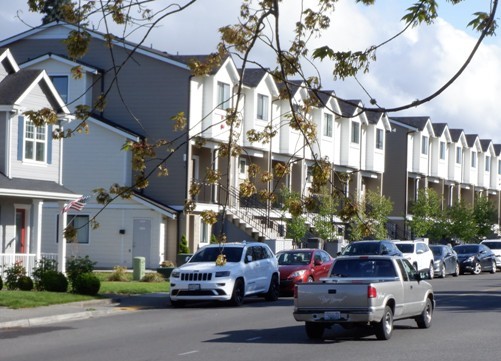
Housing has been a growing priority for Futurewise. When the Growth Management Act was passed in 1990, Washington State was one of the most affordable places to live in the country
Affordable Housing: Priority one in Futurewise’s strategy
Now it is one of the most expensive. Our framework for growth needs to change in response. That’s why we led campaigns to pass Seattle’s Housing Affordability and Livability Agenda from 2016-19, championed a complete overhaul of housing requirements in comprehensive plans (HB 1220 passed in 2021 – the first comprehensive plans under these new rules will go into effect at the end of this year), and fought for missing middle housing options in cities across the state (HB 1110 passed in 2023 and starts going into effect in July 2025).
The tools that are in our core wheelhouse, the planning and land use systems we work in, are best suited to address housing supply. But academic research tells us that to fully address our housing crisis, we need a more comprehensive strategy that combines supply strategies with subsidies and stabilization policies. We don’t lead on these other policy areas, but we support our partners. That’s why we supported over $1 billion in state funding for affordable housing last year and endorsed the Seattle Housing Levy renewal. It’s also why we endorsed rent stabilization bills in the state legislature last year and why we are doing so again this year.
This year, our engagement in the rent stabilization conversation is a little higher profile. That is in large part because the opponents of rent stabilization are arguing that stabilization policies will stop developers from building new housing. This framing has pushed us to speak up more about how we think these policies can work together. Futurewise is one of the few local nonprofit organizations that has expertise in real estate economics but does not represent the vested interests of developers and property owners.
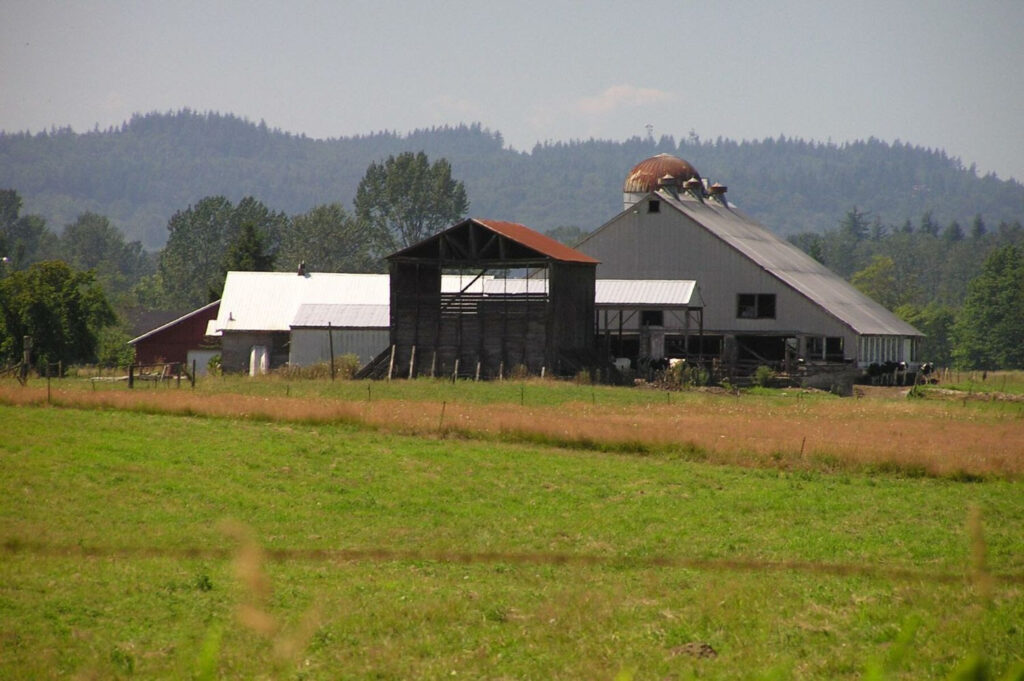
What’s the Deal with Rural ADUs?
Over the past few weeks you’ve heard us talk a lot about rural accessory dwelling units and might have some questions about what’s going on.
Thank you to the hundreds of folks all over the state who have already contacted their legislator on this issue (and I hope you’re joining us tomorrow for our Farms First on February First call in day!). But for people who are new to rural ADUs, we wanted to give a little more context about this issue.
What’s a “detached accessory dwelling unit (ADU)”?
An ADU is a unit on a property that could be considered a separate living space, and is typically a smaller space than the main dwelling. An internal ADU is located inside an existing house or building, like a basement apartment or garage apartment. An attached ADU are added on to an existing house or building, like a mother-in-law suite. A detached ADU is a completely separate building constructed on the same lot, like a backyard cottage.
This sounds familiar. But wait, I thought Futurewise liked ADUs?
In urban areas served by transit or with good walking and biking infrastructure, ADUs can be a fantastic low-impact way to increase housing options in neighborhoods. They can promote intergenerational households and provide lower cost living spaces to renters. The key point here is “in areas served by transit, walking or biking infrastructure.” In rural areas, resource lands, or farmland though, allowing ADUs can contribute to rapidly increasing development in far-flung areas, threatening limited water resources and contributing to runoff and habitat loss.
So what’s the issue with HB 2126?
· In its current form, HB 2126 essentially allows for second homes to be built in rural areas without counting those homes or the people living in them toward the rural population growth target. This means that we are at risk of adding too much development in areas that don’t have the water to service it.
To learn more about Futurewise and their legislative strategy contact Kate at Futurewise (action@futurewise.org)